Sponsored article
Ceramic Teapot Warmer: How Does It Keep Tea Warm and When Is It Useful?
- How Does a Ceramic Warmer Help Keep Tea Warm?
- Why Is Stoneware Suitable for a Teapot Warmer?
- How Should You Match a Warmer to a Teapot?
- When Is a Ceramic Teapot Warmer Most Useful?
- A Ceramic Warmer as Part of a Coordinated Tea Set
- Why Does Hand Decoration Make Each Piece Slightly Different?
- How to Use a Ceramic Warmer Safely
- How Should a Ceramic Warmer Be Cleaned?
- Ceramic Warmers and the Bolesławiec Tea Tradition
Tea is often best enjoyed slowly. During a long breakfast, afternoon tea or evening conversation, however, a teapot can lose heat well before the last cup is poured.
Read more: How Boleslawiec Polish Pottery Can Transform Your Interior
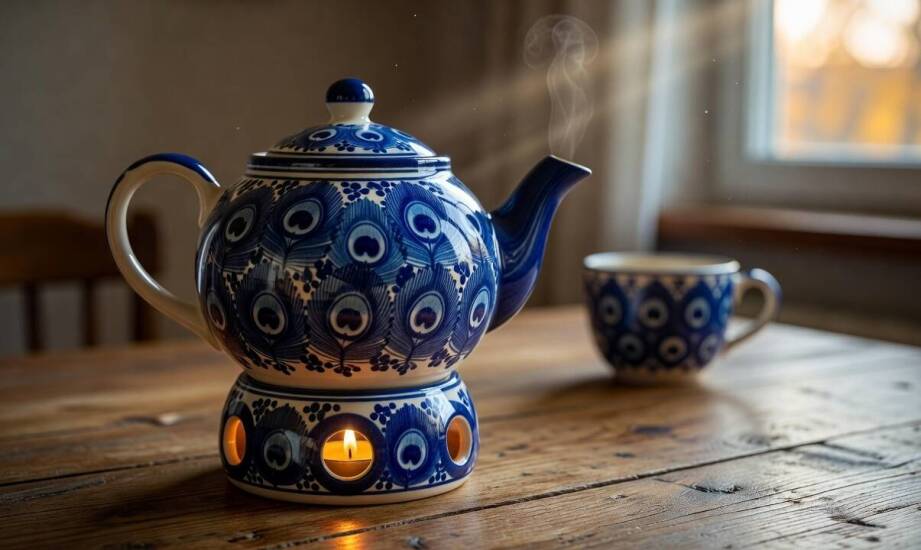
A ceramic teapot warmer provides a simple solution. A small tealight candle placed inside the base produces gentle heat underneath the teapot, helping the drink stay warm for longer without the need to repeatedly reheat it.
With traditional Bolesławiec stoneware, the warmer also becomes part of the table setting. Hand-applied decoration combines everyday functionality with the distinctive character of Polish pottery.
How Does a Ceramic Warmer Help Keep Tea Warm?
Once tea has been prepared, it begins to cool as heat is transferred from the pot to the surrounding air and table environment.
A ceramic warmer slows this process by providing a continuous source of low-level heat underneath the teapot.
A tealight placed inside the warmer produces gentle heat that rises towards the base of the teapot.
The aim is not to boil the tea again. Instead, the warmer helps maintain a comfortable serving temperature for longer.
This can be particularly useful during:
long breakfasts;
afternoon tea;
family gatherings;
meetings with guests;
relaxed evenings when one pot of tea is served over an extended period.
It reduces the need to prepare another pot simply because the first one has cooled.
Why Is Stoneware Suitable for a Teapot Warmer?
Bolesławiec stoneware is fired at high temperatures, resulting in a dense and durable ceramic material.
In the production process used by Manufaktura, the warmer is first fired at approximately 900°C. It is then decorated by hand, covered with a transparent glaze and fired again at around 1250°C.
The second firing vitrifies the stoneware and creates a durable glazed surface.
In use, the relatively thick ceramic structure sits between the flame and the teapot. This helps provide a gentler source of heat than placing the vessel directly over a much hotter cooking element.
A teapot warmer is therefore designed primarily to slow down cooling rather than rapidly increase the temperature of the drink.
This distinction is important, particularly with teas that are intended to be enjoyed at a specific serving temperature.
How Should You Match a Warmer to a Teapot?
The dimensions of the warmer should suit the size and shape of the teapot.
The upper surface needs to support the vessel securely so that it remains stable during use. An excessively small base may not provide enough support for a large pot, while a badly matched shape can make the set less comfortable to use.
When choosing a ceramic heater for a teapot, it is worth considering:
the diameter of the teapot base;
the size of the supporting surface;
the overall stability of the combination;
the position of the tealight;
the ventilation openings in the warmer.
The openings around the sides are functional as well as decorative. They allow air to reach the candle and support combustion.
At the same time, candlelight can pass through the openings, creating a soft decorative effect on the table.
When Is a Ceramic Teapot Warmer Most Useful?
A warmer makes the most sense when tea is served from a pot over a longer period.
If the entire pot is normally emptied within a few minutes, additional warming may not be necessary. During a longer meal or conversation, however, the difference becomes much more noticeable.
A ceramic warmer can be particularly practical when several people are sharing a pot and returning for another cup at different times.
It also works well when tea forms part of a more deliberate serving ritual. Instead of repeatedly leaving the table to reheat the drink, the pot can remain in the centre of the setting.
The warmer is therefore less about heating cold tea and more about extending the period during which freshly prepared tea remains pleasant to serve.
A Ceramic Warmer as Part of a Coordinated Tea Set
A teapot warmer does not have to be a purely practical accessory.
With hand-decorated Bolesławiec pottery, it can form part of a coordinated tea service alongside the teapot, cups, mugs, sugar bowl and dessert plates.
Pattern codes make it easier to find pieces decorated in the same or a related design. The warmer collection includes patterns such as 61A, 70MI and AS81.
A popular example is the 70MI pattern, which can be used across different ceramic forms to create a visually consistent tea set.
There is no requirement for every item to be identical, however.
A warmer can match the teapot exactly, or it can be combined with another pattern that uses similar colours and motifs. This gives the tableware a more individual character while maintaining a recognisable Bolesławiec style.
Why Does Hand Decoration Make Each Piece Slightly Different?
Traditional Bolesławiec pottery is decorated by hand using stamping techniques.
The artist applies individual motifs to the ceramic surface before glazing and final firing. Because this work is carried out manually, small variations in the position or intensity of individual stamps may occur.
These differences are part of the handcrafted character of the pottery rather than a defect.
They allow pieces made in the same pattern to remain visually connected while still retaining subtle individual variation.
For customers building a larger collection, this combination of consistency and hand craftsmanship is one of the characteristic features of Bolesławiec stoneware.
How to Use a Ceramic Warmer Safely
Because a teapot warmer uses an open flame, basic candle safety remains important.
Place the warmer on a stable, level and heat-resistant surface and keep it away from easily flammable objects such as paper napkins, loose table decorations or other materials that could come into contact with the flame.
A standard tealight should be positioned correctly inside the base before lighting.
Never leave the burning candle unattended.
After use:
extinguish the candle;
allow the ceramic to cool naturally;
avoid moving the warmer while it is still very hot;
do not expose hot stoneware to sudden temperature changes.
A ceramic warmer should be used for maintaining warmth, not for boiling or reheating cold liquid from a low temperature.
How Should a Ceramic Warmer Be Cleaned?
Cleaning is straightforward, but the warmer should always be allowed to cool completely first.
For regular care, the glazed surface can be wiped with a soft damp cloth.
Avoid aggressive abrasive tools that could unnecessarily scratch the glaze.
If candle wax drips onto the ceramic, allow it to solidify before removing as much as possible gently. Remaining wax can then be softened carefully with mild warmth and wiped away with a soft cloth.
The ventilation openings should also be kept clear so that air can circulate freely around the tealight during future use.
Ceramic Warmers and the Bolesławiec Tea Tradition
A ceramic warmer shows how a simple functional object can become part of a larger tableware collection.
Manufaktura in Bolesławiec produces hand-decorated stoneware inspired by the traditional ceramic techniques of the region. The same decorative language can appear across teapots, mugs, plates, bowls and warmers.
This makes it possible to build a tea set gradually rather than buying every piece at once.
A warmer can be added when the need arises, whether for family breakfasts, afternoon tea or evenings spent around the table.
Its main advantage is simple: it helps a prepared pot of tea stay warm for longer while also adding a decorative element to the table.
For people who enjoy serving tea slowly rather than drinking it immediately, that combination of function and traditional craftsmanship makes a ceramic teapot warmer a particularly useful accessory.
You might be interested
Pork jowl as a key ingredient in Polish cuisine

How can fit-out design increase property value?

Copyright Law and Artificial Intelligence: What Are the Prospects?
